











Role of Technology in Advancing Sustainable Fashion Practices
The fashion sector has historically been recognized for its swift production cycles, fleeting trends, and considerable environmental consequences. This has exerted significant stress on natural resources, leading to pollution and waste. Nevertheless, the emergence of environmentally aware consumer behavior is pushing the industry to reconsider its methods. The convergence of technology and fashion, referred to as fashion technology, is essential in promoting sustainable innovation and transforming the industry’s future. Through the incorporation of technology in the design, manufacturing, and distribution stages, fashion labels are discovering innovative methods to enhance sustainability, minimize waste, and develop environmentally-friendly tech solutions. This change is crucial for creating a more sustainable fashion, ethical industry that reflects consumer principles.
Digital Fabrication: Revolutionizing the Production Process
One of the most groundbreaking advances in fashion technology is digital fabrication, with 3D printing in fashion leading the way. 3D printing has shifted the conventional production process by enabling designers to create complex and precise patterns using minimal materials. Unlike traditional methods that often result in fabric scraps and waste, 3D printing builds items layer by layer, using only what is necessary. This means that fashion brands can produce garments and accessories with near-zero waste.
For instance, New York-based fashion house ThreeASFOUR has embraced 3D printing to create unique, sculptural garments that highlight the potential of this technology in reducing material waste. Their work showcases how combining artistry with advanced technology can lead to sustainable innovation.
Additionally, 3D printing in fashion facilitates on-demand production, addressing the problem of overproduction that affects the industry. This change not only lessens the environmental impact but also enables increased personalization, addressing individual preferences without surplus stock. Automated pattern generation and cutting enhance fabric utilization by making certain that every inch of material is fully used. As fashion technology advances, the integration of digital fabrication methods is expected to become commonplace, further reinforcing the industry’s dedication to sustainable innovation.

Smart Textiles and Eco-Friendly Materials
Sustainable innovation extends beyond production methods and into the development of new materials. Smart fabrics and eco-friendly tech solutions are leading the charge in this area. Smart textiles, which incorporate digital elements such as sensors and conductive fibers, offer not just comfort but also functionality. For example, temperature-regulating smart fabrics can help minimize the need for seasonal clothing changes, thus reducing consumer waste and production demands. These innovations prove that fashion technology can be both practical and sustainable.
On the eco-friendly front, advancements in materials science have given rise to alternatives that are more sustainable than traditional textiles. Bio-fabricated materials such as lab-grown leather and plant-based fibers are replacing animal-derived and synthetic fabrics. These materials often require fewer resources to produce and are biodegradable, meaning they have a smaller environmental impact.
One notable example is the use of Mylo™, a mushroom-based leather alternative that is being adopted by major American brands like Adidas and Stella McCartney for creating sustainable footwear and accessories. Nanotechnology is also making textiles more durable and resistant to wear, which extends the life of garments and reduces the need for frequent replacements. The development of these smart fabrics and innovative materials is setting a new standard in sustainable fashion, showing that eco-friendly tech is not just a trend but a necessity for the industry’s future.
Blockchain for Transparent and Ethical Supply Chains
A significant challenge in the fashion industry is the lack of transparency in supply chains. Consumers are increasingly demanding to know how and where their clothes are made, but verifying this information can be difficult. Blockchain technology is stepping in as a solution, offering a way to create fully transparent and traceable supply chains. Blockchain allows all stakeholders in the production process—from farmers growing organic cotton to the final manufacturers—to document their practices on a secure, decentralized ledger. This information is immutable, meaning it cannot be altered once recorded, ensuring that consumers receive accurate data about the sustainability and ethics behind their purchases.
Blockchain within the supply chain extends beyond consumer trust; it also makes brands responsible for their environmental and social behaviors. For instance, companies can utilize blockchain to verify that their materials are obtained sustainably and that their labor practices adhere to ethical norms. Everledger, a firm recognized for its blockchain-driven traceability solutions, has collaborated with American fashion labels to guarantee that the materials utilized are conflict-free and ethically sourced. This openness is essential for encouraging fair labor practices, minimizing environmental damage, and avoiding greenwashing, where companies misleadingly assert to be more environmentally friendly than they truly are. The incorporation of blockchain technology in fashion demonstrates how digital advancements can enhance the industry’s accountability and align it with sustainability objectives.
AI and Data Analytics: Tailoring Production to Demand
AI-driven design and data analytics are revolutionizing how fashion brands plan and manage their production. One of the primary contributors to waste in fashion is overproduction, which often leads to excess inventory that ends up in landfills. AI-driven design tools and predictive analytics can solve this issue by tailoring production to actual demand. By analyzing consumer behavior and market trends, AI can help brands forecast which styles and sizes are likely to sell well, enabling them to plan more accurately and avoid surplus production.
AI also plays a role in sustainable fashion design by optimizing the use of resources. Algorithms can suggest fabric layouts that minimize waste or simulate the final look of a garment, allowing designers to make adjustments before cutting the actual fabric. This approach to resource management is a cornerstone of sustainable innovation in fashion. Additionally, data analytics provide valuable insights into consumer preferences, which brands can use to create products that meet demand more precisely, further reducing waste. The role of AI in fashion technology is proving to be not just a tool for enhancing creativity but also a vital component in building a sustainable future.
Virtual and Augmented Reality in Retail
Virtual and augmented reality technologies are reshaping the retail experience, offering solutions that promote sustainability. Digital fashion, enabled by VR and AR, allows consumers to try on clothes virtually, which reduces the need for physical samples and minimizes returns—one of the major contributors to waste in online shopping. When customers can better assess how a garment will fit or look, they are less likely to order multiple sizes or colors to try on at home, only to return most of them.
This online shopping method also lessens the carbon footprint linked to shipping and managing returned items. American Eagle Outfitters, a prominent apparel retailer in the U.S., has integrated AR technology to enable customers to virtually try on their denim line, thereby decreasing unwarranted returns and encouraging sustainability. AR technology is utilized in retail to create engaging displays that inform consumers about the brands’ sustainable practices, thus increasing transparency and trust. By incorporating digital fashion instruments into their platforms, brands can offer captivating shopping experiences while promoting eco-friendly technological methods that align with sustainability objectives.
Tech-Enhanced Recycling Initiatives: Making Circular Fashion a Reality
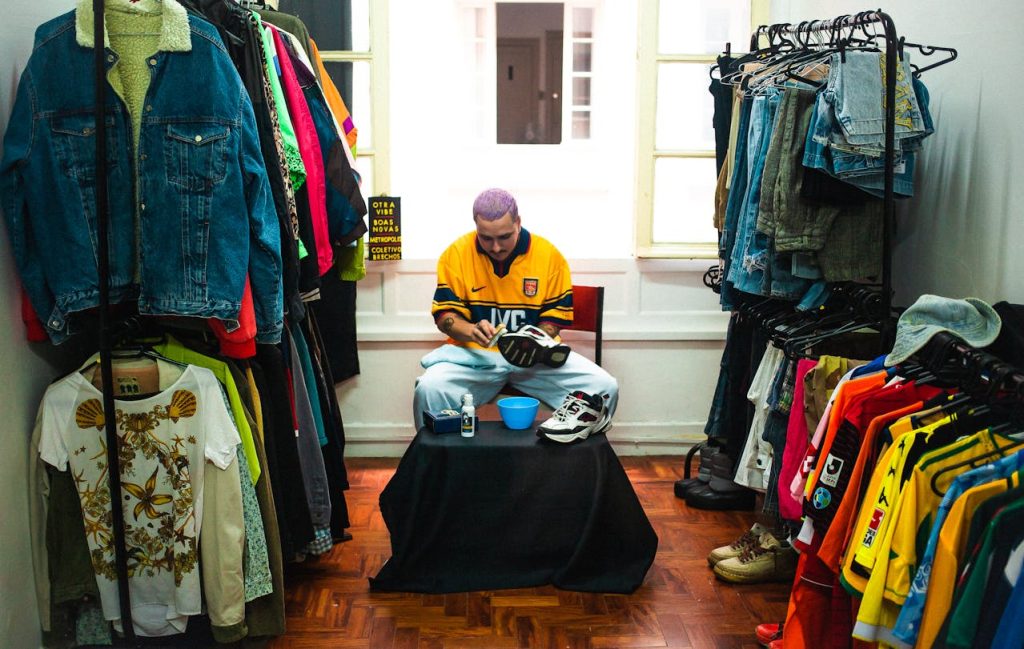
The concept of circular fashion is gaining traction as brands and consumers alike recognize the need for a system where garments have extended lifecycles. This approach involves designing products that can be reused, recycled, or upcycled to minimize waste and make the most of existing materials. Technology plays a significant role in achieving this vision. AI-driven sorting systems can identify and separate different types of fibers for efficient recycling. These systems ensure that clothing items are broken down properly and the recovered materials can be reused in new garments.
Blockchain technology enhances this process by offering traceability, which is vital for confirming that items have been recycled or upcycled as asserted. Blockchain-enabled platforms can provide consumers with a transparent history of how their returned garments have been reused or resold. Upcycling has been adopted by both independent designers and large brands, who use digital fashion design tools to convert old clothing into fresh, stylish items.
Patagonia is an example of an American company that is leading in this domain. They have leveraged technology to implement an efficient recycling program that encourages consumers to return used items, which are then upcycled or recycled into new products. Startups and established fashion houses are using eco-friendly tech solutions to streamline recycling and create a closed-loop system where waste is minimized. This model not only supports sustainability but also encourages a culture of conscious consumption, which is essential for long-term environmental benefits.
Conclusion
With the fashion industry under increasing pressure to adopt more eco-friendly practices, technology’s role is becoming crucial in facilitating this change. Technological advancements are tackling some of the largest sustainability issues in the industry, whether via 3D printing in fashion, AI-enhanced design, or blockchain transparency in supply chains.
The emergence of digital fashion, innovative textiles, and sustainable technology is transforming the industry to focus on sustainability while maintaining creativity and consumer attraction. By adopting these technological innovations, the fashion industry can progress to a future where style and sustainability coexist rather than conflict, becoming integral to the same resolution. This change signifies not merely a chance but an obligation for brands to conform with the increasing desire for sustainable methods in fashion.